Chamonix & Aiguille du Dru
Finnegan Flynn
| 13-05-2026

There are mountains that impress you, and then there are mountains that stop you mid-sentence.
Aiguille du Dru is firmly in the second category. Rising like a granite blade above the Chamonix valley in the French Alps, its two summits — Grand Dru at 3,754 meters and Petit Dru at 3,733 meters — jab into the sky with almost aggressive verticality.
The west face drops nearly a thousand meters of near-vertical rock. Mountaineers have been obsessing over it since the early 20th century, and even from the valley floor, it's the kind of view that makes you quietly grateful you're just looking at it from a distance with a coffee in hand.
Getting to Chamonix
The closest major airport is Geneva, Switzerland, roughly 90 kilometers away — about an hour by road or direct shuttle bus. Shuttle services between Geneva Airport and Chamonix run frequently and cost around $40 to $60 per person each way, depending on the provider.
UNESCO-listed, outrageously photogenic, and more accessible than you think — here's your complete Dolomites playbook.
People keep calling this tiny Swiss alpine lake "fake" — until they actually jump in and feel the ice-cold reality!
90 minutes from Tokyo hides a volcano crater lake with a red shrine gate, Mt. Fuji views, and pirate ships
Italy hides a car-free alpine plateau bigger than Manhattan — with wooden huts, wildflowers, and Dolomite peaks on every side
90 minutes from Portland sits a snow-capped volcano so perfectly mirrored in a lake it looks computer-generated
This tiny Italian village of 370 people has the most photographed view in the entire Dolomites — and most tourists fly right past it
From Paris, direct trains to Saint-Gervais-les-Bains connect to a regional train into Chamonix, taking around five to six hours total. Once in the valley, the free Chamonix Bus network connects all the main villages — genuinely one of the better public transit setups in any Alpine resort.
How to See Aiguille du Dru Up Close
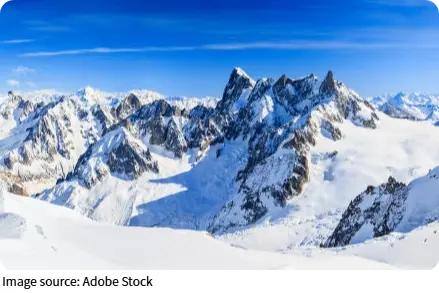
The most accessible view of Les Drus is from the Montenvers railway, a historic cog-wheel train that climbs from Chamonix town center to 1,913 meters in about 20 minutes. From the Montenvers station, the view of Aiguille du Dru directly above the Mer de Glace glacier is one of the most photographed mountain scenes in Europe.
The train runs daily, with a round-trip ticket costing around $40 per person. From the station, you can also descend to the Mer de Glace — France's largest glacier — via gondola and stairs.
For even higher perspectives, the Aiguille du Midi cable car lifts you from Chamonix town at 1,035 meters all the way to 3,842 meters in just 20 minutes — the highest vertical ascent of any cable car in the world. From the summit terrace, you get a full panorama of the Mont Blanc massif including Les Drus, Mont Blanc itself, and on clear days the Matterhorn in the distance.
A round-trip ticket costs around $90 per person and booking well in advance is strongly recommended, especially in summer when entry passes sell out by early morning.
Aiguille du Dru
Best Time to Visit
Summer — June through September — delivers the clearest skies and the most reliable visibility from both Montenvers and the Aiguille du Midi cable car. Early morning departures are worth the effort; cloud typically builds around mid-morning and can obscure the peaks by early afternoon.
Spring and autumn offer fewer crowds and sometimes equally spectacular clarity, though weather is less predictable. Winter transforms the whole valley into a world-class ski destination, with Les Drus forming a dramatic backdrop above the off-piste Vallée Blanche run.
Where to Stay
Chamonix has accommodation across a wide range. Budget travelers can find hostel dorm beds from around $35 to $50 per night, while mid-range hotels in the town center run $120 to $200 per night. For something more atmospheric, self-catered chalets and apartments with Mont Blanc views start from around $118 per night and are ideal for longer stays.
Luxury chalets and five-star properties like Le Hameau Albert 1er sit at $400 to $600 per night and higher. The nearby village of Argentière offers slightly lower rates with a quieter atmosphere, while Les Houches suits families particularly well.
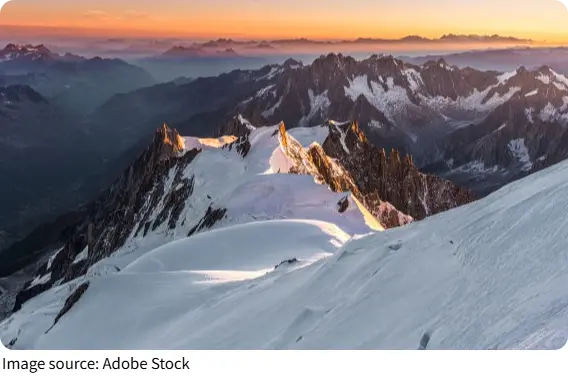
Standing in the Chamonix valley with Aiguille du Dru rising straight above you, all granite and ice and impossible angles, it's hard to believe somewhere this dramatic is this accessible. You don't need to be a climber to experience it — just someone willing to get up early and catch the first cable car.